
Classic Journey: Japan
Japan’s essential route in six private days, from the Toyosu tuna auction to a geiko’s dance in Gion.
6 days · Tokyo, Hakone, Kyoto, Nara, Osaka · Year-round · Moderate pace, two early starts · First-time visitors, couples, families
Signature moments
– Tuna auction, sushi breakfast and sumo practice, all before 10am
– The Shinkansen to Kyoto on the Mount Fuji side of the train
– A private evening with geiko and maiko in Gion
– The Shinkansen to Kyoto on the Mount Fuji side of the train
– A private evening with geiko and maiko in Gion

Day 1 – Tokyo
Meet your guide at the hotel and start at Meiji Jingu, a shrine inside a forest of 100,000 trees planted by hand a century ago. Walk Omotesando, the avenue where fashion houses hired Japan’s best architects, and stop at the Nezu Museum and its hillside garden. End the day on the open-air roof of Shibuya Sky as the city lights come on, with the Scramble Crossing far below.
Tour Highlights
– Meiji Jingu
– Omotesando architecture walk
– Nezu Museum and garden
– Sunset at Shibuya Sky
– Omotesando architecture walk
– Nezu Museum and garden
– Sunset at Shibuya Sky

Day 2 – Tokyo
An early start for Toyosu Market and the tuna auction, seen from the gallery above the floor. Breakfast is sushi made with fish from that morning. Then a sumo stable in Ryogoku, close enough to hear the wrestlers hit. After a rest at the hotel, take a boat down the Sumida River to Asakusa, walk Nakamise street to Senso-ji, Tokyo’s oldest temple, and finish among the knife and kitchenware shops of Kappabashi, or in Akihabara if anime and electronics appeal more.
Tour Highlights
– Toyosu tuna auction
– Sushi breakfast
– Sumo morning practice
– Sumida River cruise
– Senso-ji and Nakamise
– Sushi breakfast
– Sumo morning practice
– Sumida River cruise
– Senso-ji and Nakamise

Day 3 – Tokyo to Hakone
Shinkansen to Odawara, about 35 minutes, where your vehicle is waiting. Ride the Hakone Ropeway over the sulfur vents of Owakudani, then cross Lake Ashi by boat past the red lakeside torii of Hakone Shrine. After lunch by the lake, walk the Hakone Open-Air Museum, a mountainside sculpture park with its own Picasso pavilion. Check in to a ryokan with a private hot-spring bath and a kaiseki dinner served in your room.
Tour Highlights
– Shinkansen to Odawara
– Hakone Ropeway and Owakudani
– Lake Ashi cruise
– Hakone Open-Air Museum
– Ryokan night
– Hakone Ropeway and Owakudani
– Lake Ashi cruise
– Hakone Open-Air Museum
– Ryokan night

Day 4 – Hakone to Kyoto
Back on the Shinkansen, seated on the right-hand side for Mount Fuji, weather permitting. In Kyoto, go straight to Arashiyama: the bamboo grove, the 14th-century garden of Tenryu-ji, and a rickshaw ride along the river. Later, shape seasonal wagashi sweets with a confectioner and eat them with matcha at a private tea ceremony. Dinner is tempura at the counter of Tempura Endo in Gion.
Tour Highlights
– Fuji-side Shinkansen seats
– Arashiyama bamboo grove
– Tenryu-ji
– Rickshaw ride
– Wagashi class and tea ceremony
– Arashiyama bamboo grove
– Tenryu-ji
– Rickshaw ride
– Wagashi class and tea ceremony
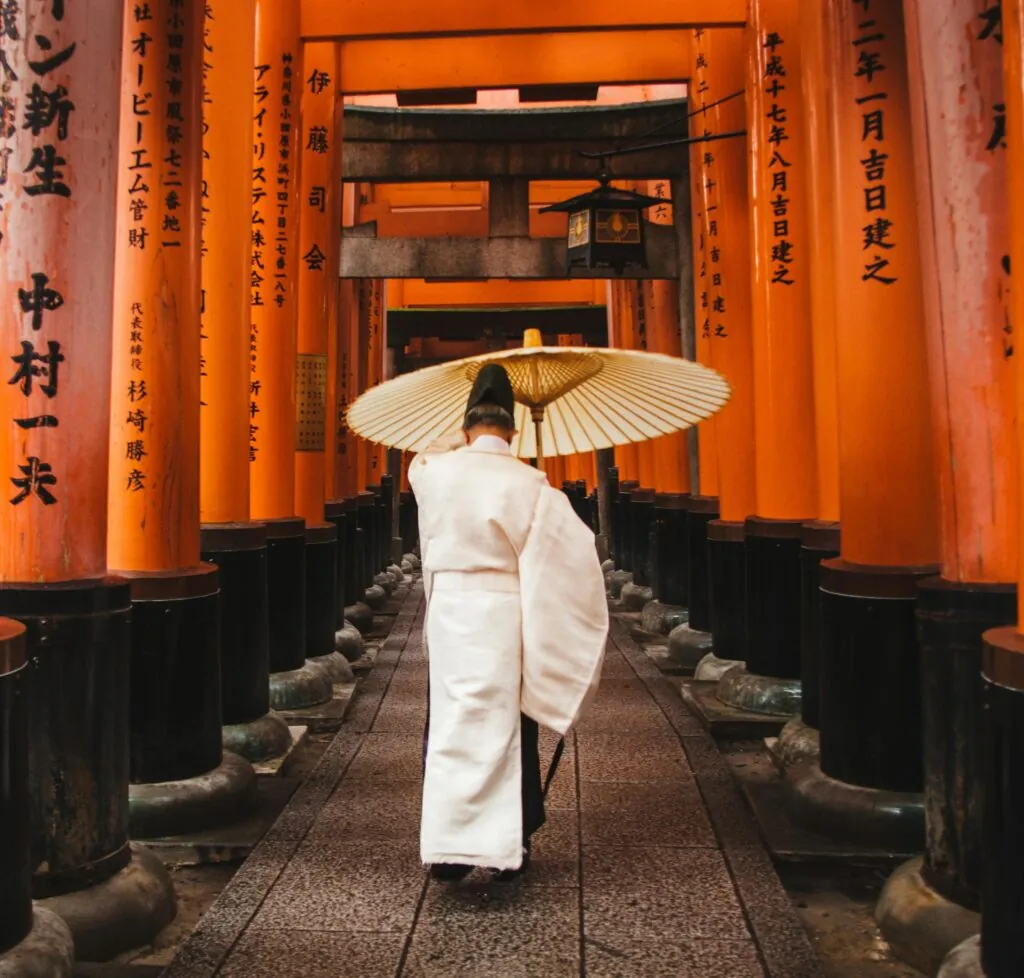
Day 5 – Kyoto
Climb Fushimi Inari before 8am, when the tunnels of vermilion gates are close to empty. Then Kiyomizu-dera on its wooden stage above the city, and the stone lanes of Sannenzaka and Ninenzaka down into Gion. After lunch, the Golden Pavilion of Kinkaku-ji and the fifteen-stone rock garden of Ryoan-ji. The evening is yours, or add a real-sword samurai lesson in a former samurai residence.
Tour Highlights
– Fushimi Inari, early
– Kiyomizu-dera
– Sannenzaka and Ninenzaka
– Kinkaku-ji
– Ryoan-ji
– Kiyomizu-dera
– Sannenzaka and Ninenzaka
– Kinkaku-ji
– Ryoan-ji

Day 6 – Nara, Osaka and Gion
Drive to Nara for Todai-ji, where a 15-meter bronze Buddha sits in one of the largest wooden buildings in the world, with deer wandering the park outside. Continue to Osaka for a walking lunch through Dotonbori: takoyaki, kushikatsu and whatever the stalls are grilling that day. Back in Kyoto, rest before a private evening in Gion with geiko and maiko: dinner, dance, shamisen and the drinking games of the teahouses.
Tour Highlights
– Todai-ji and Nara Park
– Dotonbori food walk
– Private geiko and maiko dinner
– Dotonbori food walk
– Private geiko and maiko dinner
Good to know
– Sumo stables follow the tournament calendar. When morning practice isn’t open, a sumo demonstration with a chanko lunch takes its place.
– The Toyosu upper gallery is open to all; the lower observation deck is by lottery.
– Kinkaku-ji and Fushimi Inari are busiest from 10am; the order of the Kyoto day is built around that.
– The Toyosu upper gallery is open to all; the lower observation deck is by lottery.
– Kinkaku-ji and Fushimi Inari are busiest from 10am; the order of the Kyoto day is built around that.


