
Sacred Trails and Temple Stays
Zen practice in Kyoto, a night with the monks of Koyasan, then the pilgrim trail to the three Grand Shrines of Kumano.
5 days · Kyoto, Mount Koya, Kumano Kodo, Kyoto · March – November · Active: a 7 km trail walk and a stone stairway climb · Walkers, repeat visitors, anyone wanting Japan at walking pace
Signature moments
– Zazen and garden raking with a monk, before the temple opens
– Okunoin by lantern light, with a monk as your guide
– The last 7 km of the Nakahechi pilgrim route to Kumano Hongu Taisha
– Okunoin by lantern light, with a monk as your guide
– The last 7 km of the Nakahechi pilgrim route to Kumano Hongu Taisha
Day 1 – Kyoto
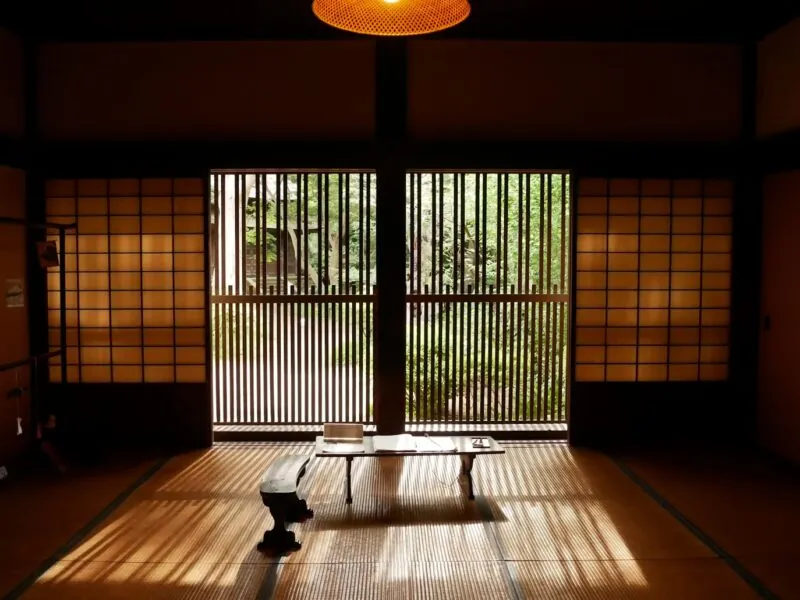
Begin before the gates open at a Zen sub-temple: zazen with a monk, or a private yoga session, then a lesson in raking the gravel garden. Walk the Philosopher’s Path along the canal, stopping at Honen-in, a moss-roofed gate most visitors walk past, and finish at Ginkaku-ji, the Silver Pavilion. If your dates fall on the 15th, 21st or 25th, browse one of Kyoto’s monthly temple markets for old ceramics and textiles. Dinner is shojin ryori, the Buddhist vegetarian cuisine you’ll eat again on the mountain.
Tour Highlights
– Private zazen and garden raking
– Philosopher’s Path
– Honen-in
– Ginkaku-ji
– Shojin ryori dinner
– Philosopher’s Path
– Honen-in
– Ginkaku-ji
– Shojin ryori dinner
Day 2 – Mount Koya
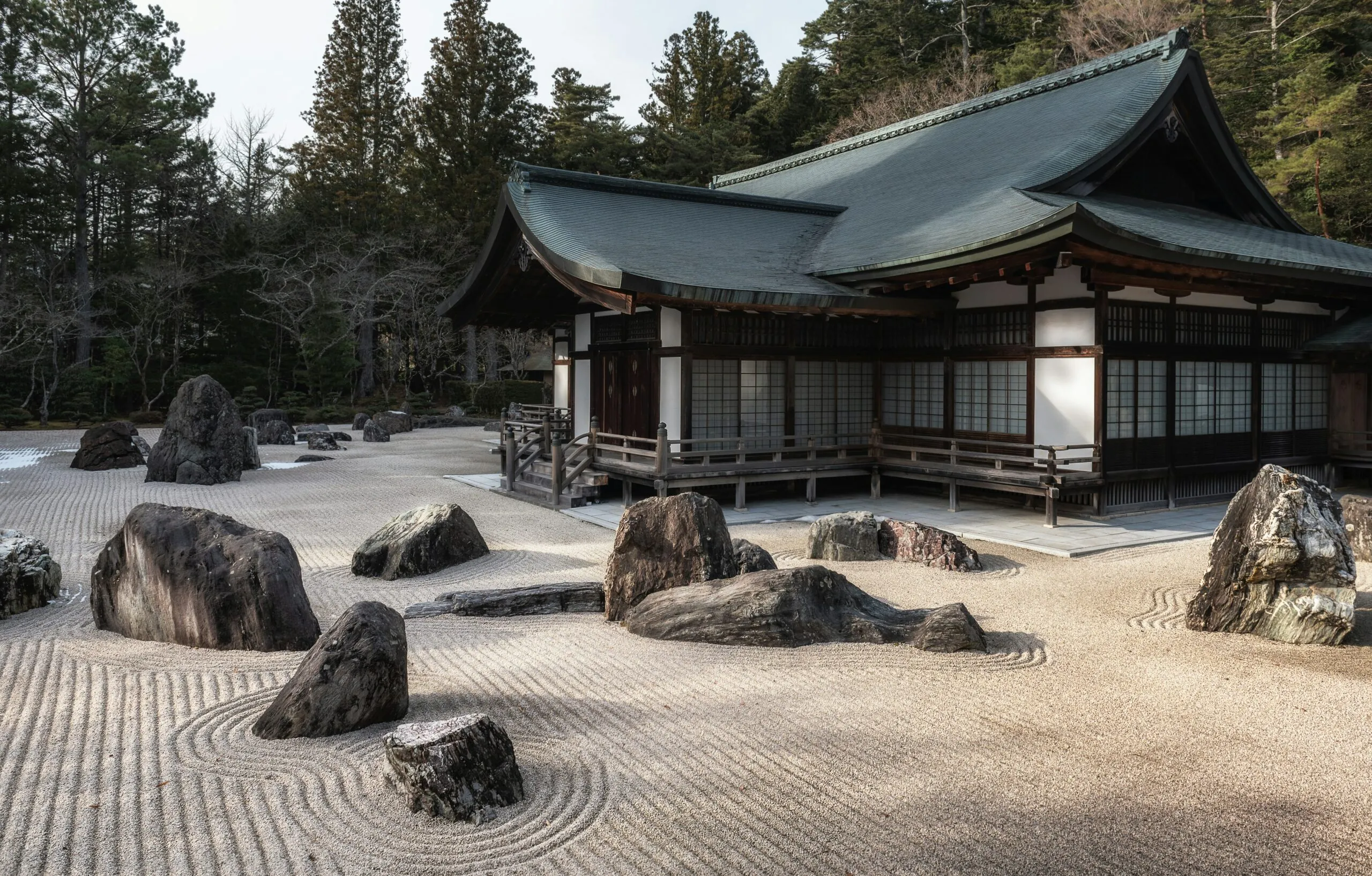
Drive to Koyasan, about two and a half hours, the mountain monastery town founded by the monk Kukai in 816. See the vermilion Konpon Daito pagoda and Banryutei at Kongobu-ji, the largest rock garden in Japan. Check in to a shukubo temple lodging for dinner, then walk Okunoin by lantern light with a monk: two kilometers of cedar and more than 200,000 graves, ending at Kukai’s mausoleum.
Tour Highlights
– Konpon Daito
– Kongobu-ji
– Night walk through Okunoin
– Temple lodging
– Kongobu-ji
– Night walk through Okunoin
– Temple lodging
Day 3 – Koyasan to the Kumano Kodo
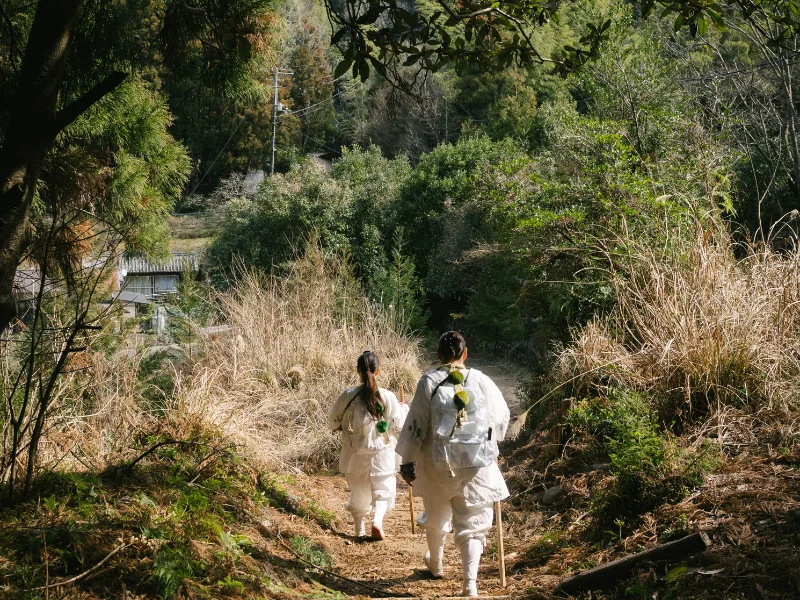
Join the 6am prayers and the goma fire ritual. Then drive south through the Kii Mountains, about three hours, to Hosshinmon-oji, the gate where pilgrims entered Kumano’s sacred ground. Walk the final 7 km of the Nakahechi route through cedar forest and tea fields, past small roadside shrines, to Kumano Hongu Taisha and the giant torii at Oyunohara. Overnight at a riverside onsen inn in Kawayu, where hot water rises through the riverbed and you can dig your own pool.
Tour Highlights
– Morning goma fire ritual
– Hosshinmon-oji to Hongu walk
– Kumano Hongu Taisha
– Oyunohara torii
– Kawayu Onsen
– Hosshinmon-oji to Hongu walk
– Kumano Hongu Taisha
– Oyunohara torii
– Kawayu Onsen
Day 4 – The three Grand Shrines
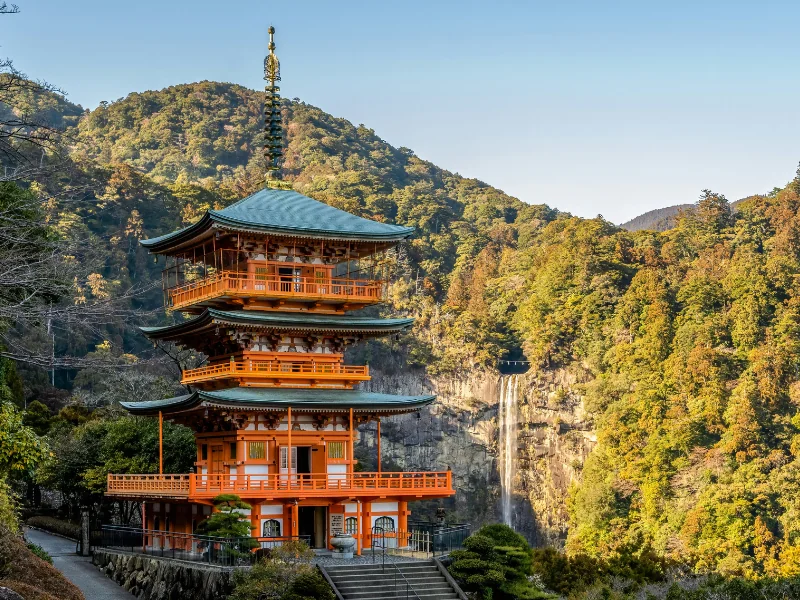
Follow the pilgrims’ water route down the Kumano River by traditional wooden boat to Kumano Hayatama Taisha in Shingu. Then climb the cedar-lined stone stairs of Daimon-zaka to Kumano Nachi Taisha and the three-story pagoda of Seiganto-ji, framed against Nachi Falls, a 133-meter drop and the tallest in Japan. Back to Kawayu for a last soak.
Tour Highlights
– Kumano River boat
– Hayatama Taisha
– Daimon-zaka
– Nachi Taisha and Nachi Falls
– Hayatama Taisha
– Daimon-zaka
– Nachi Taisha and Nachi Falls
Day 5 – Return to Kyoto
A final morning soak, then the drive back to Kyoto, about four hours, arriving mid-afternoon. Time to rest before a farewell kaiseki dinner at a Kyoto counter restaurant.
Tour Highlights
– Return to Kyoto
– Farewell kaiseki dinner
– Farewell kaiseki dinner
Good to know
– Luggage goes ahead by car on walking days.
– Koyasan sits at 800 meters and is cold from November to March. Temple lodgings have tatami rooms and futon; some have private baths.
– The Kumano River boat runs from March to November.
– Kyoto’s temple markets are monthly: the 15th (Chion-ji), 21st (To-ji) and 25th (Kitano Tenmangu).
– Koyasan sits at 800 meters and is cold from November to March. Temple lodgings have tatami rooms and futon; some have private baths.
– The Kumano River boat runs from March to November.
– Kyoto’s temple markets are monthly: the 15th (Chion-ji), 21st (To-ji) and 25th (Kitano Tenmangu).